Your Western roman empire climate images are available. Western roman empire climate are a topic that is being searched for and liked by netizens today. You can Get the Western roman empire climate files here. Get all royalty-free images.
If you’re looking for western roman empire climate images information linked to the western roman empire climate keyword, you have pay a visit to the right site. Our site frequently provides you with hints for refferencing the highest quality video and image content, please kindly search and locate more informative video content and graphics that match your interests.
Western Roman Empire Climate. We can learn crucial lessons by examining the natural forces that shaped Romes rise and fall. The Roman Empire reached its maximum peak during a phase of warm wet and stable climate fostered by high stable solar activity and weak volcanic activity the Roman Climate Optimum or Roman Warm Period. Sometime after AD 250400 however the climate turned unstable. Coincided with the demise of the western Roman Empire and the turmoil of the Migration Period.
 Climate In Ancient Rome Lesson For Kids Video Lesson Transcript Study Com From study.com
Attila Western Roman Empire LEGENDARY Difficulty Lets. Further research suggested that this high-latitude eruption led to pronounced changes in hydroclimate including colder seasonal temperatures in specific Mediterranean regions during the two-year. From climate change new religions moral decay immigration greedy soldiers and even lead poisoning. From AD 250 to 550 the climate flipped from one decade to the next between dry and cool and warm and wet. However climate is only one variable at play. In the following years harvest after harvest failed.
Climate Change - Total War.
Currently the number of records from different locations the toolbox of suitable analytic methods and the precision of dating are evolving rapidly contributing to an. In particular this term is used in historiography to describe the period from 286 to 476 where there were separate coequal courts dividing the governance of the empire in the Western and the Eastern. By 500 the western Roman Empire was gone. Relatively modest changes in European climate in the past have had profound implications for society Penn State University climate scientist Michael. The lack of sunlight and drop in temperatures lead to mass crop failure. Climate flips and Black Death.
 Source:
Attila Western Roman Empire LEGENDARY Difficulty Lets. The objective of this lets play is to rebuild and reunite the Roman Empire so its influence covers the mapInitially this will be released on Monday Wednes. Wet and warm summers occurred during periods of Roman and medieval prosperity. Currently the number of records from different locations the toolbox of suitable analytic methods and the precision of dating are evolving rapidly contributing to an. The centuries during which the empire was built and flourished are known even to climate scientists as the Roman Climate Optimum From circa 200 BC to AD 150 it was warm wet and stable across.
Source:
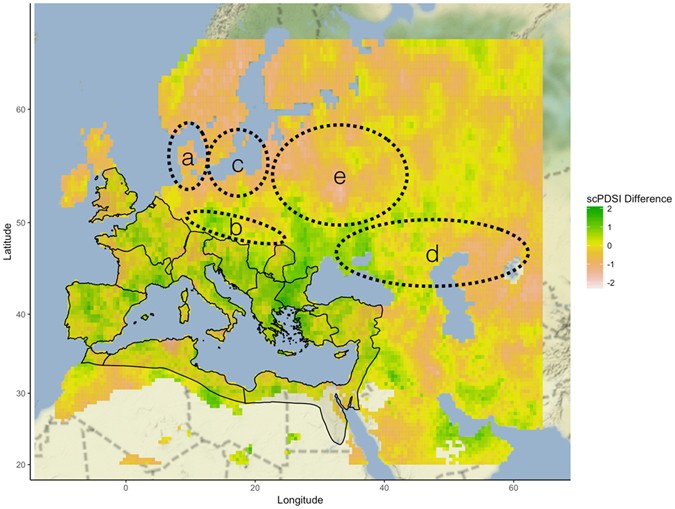
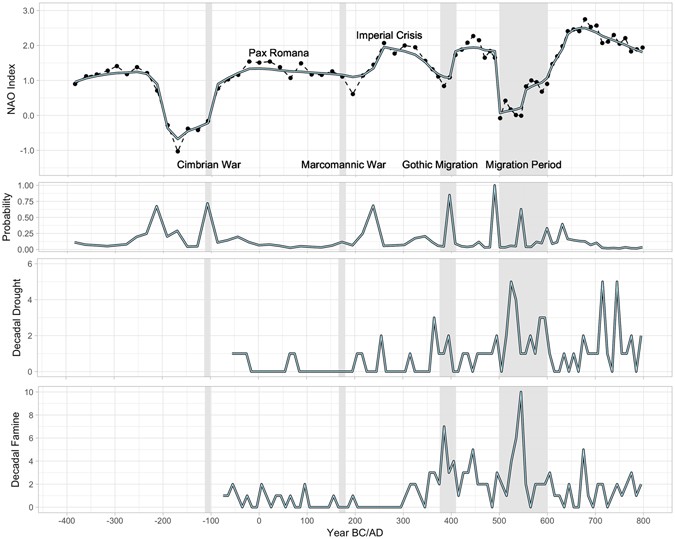
The eruption in 535 or 536 CE probably impacted the Western Roman Empire the most directly. Further research suggested that this high-latitude eruption led to pronounced changes in hydroclimate including colder seasonal temperatures in specific Mediterranean regions during the two-year. In the following years harvest after harvest failed. Wet and warm summers occurred during periods of Roman and medieval prosperity. Shifts in the North Atlantic Oscillation NAO from 12 to 01 in four episodes increased droughts on the Roman Empires periphery and created push factors for migrations.
 Source: wires.onlinelibrary.wiley.com
Rivers burst their banks and fields flooded. However climate is only one variable at play. There are 1001 reasons people give for the collapse of the Western Roman Empire. Attila Western Roman Empire LEGENDARY Difficulty Lets Play Ep. This blocked out sunlight causing an average drop in global temperatures of 2C the greatest in 2000 years.
Source:
The eruptions shot clouds of volcanic ash into the air. 1 on the decline and fall of the Roman Empire in general 2 more specifically on the downfall in. There is really no mystery per se as to why the Western Empire broke apart. Climate proxy records show that 43 and 42 BCE. The only debate is why the Empire could not.
 Source: workmall.com
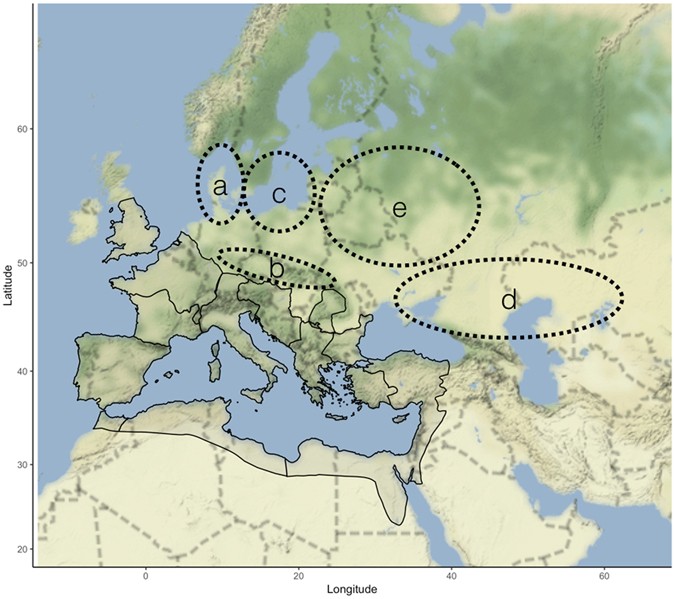
Historical circumstances may challenge recent political and fiscal reluctance to mitigate projected climate change. The objective of this lets play is to rebuild and reunite the Roman Empire so its influence covers the mapInitially this will be released on Monday Wednes. How Climate Change and Plague Helped Bring Down the Roman Empire. The eruptions shot clouds of volcanic ash into the air. Recently some scholars have argued that drought in Central Asia and the onset of a cooler climate in North-West Eurasia may have put Germanic tribes Goths and Huns on the move into the Roman Empire provoking the Migration Period and eventually leading to the downfall of the Western Roman Empire.
 Source: wires.onlinelibrary.wiley.com
The eruptions shot clouds of volcanic ash into the air. Increased climate variability from 250 to 600 CE. For months the weather was abysmal not only through the winter but into the next spring summer and beyond. However climate is only one variable at play. In particular this term is used in historiography to describe the period from 286 to 476 where there were separate coequal courts dividing the governance of the empire in the Western and the Eastern.
 Source: pinterest.com
How Climate Change and Plague Helped Bring Down the Roman Empire. Based on the Web of Science WoS database we applied a combination of three different search queries for retrieving the relevant literature. Such historical data may provide a basis for counteracting the recent political and fiscal reluctance to mitigate projected climate change. Wet and warm summers occurred during periods of Roman and medieval prosperity. However climate is only one variable at play.
 Source: nature.com
Relatively modest changes in European climate in the past have had profound implications for society Penn State University climate scientist Michael. Lower temperatures negatively affected agriculture that caused famines and pestilences and that reduced the population. By 500 the western Roman Empire was gone. From AD 250 to 550 the climate flipped from one decade to the next between dry and cool and warm and wet. We are affected by global warming in ancient times the problem seems to have been global cooling.
Source:
However climate is only one variable at play. Climate proxy records show that 43 and 42 BCE. Further research suggested that this high-latitude eruption led to pronounced changes in hydroclimate including colder seasonal temperatures in specific Mediterranean regions during the two-year. Currently the number of records from different locations the toolbox of suitable analytic methods and the precision of dating are evolving rapidly contributing to an. How Climate Change and Plague Helped Bring Down the Roman Empire.
 Source: courses.lumenlearning.com
Climate proxy records show that 43 and 42 BCE. This was caused by a solar maximum which had set in ca. Recently some scholars have argued that drought in Central Asia and the onset of a cooler climate in North-West Eurasia may have put Germanic tribes Goths and Huns on the move into the Roman Empire provoking the Migration Period and eventually leading to the downfall of the Western Roman Empire. Attila Western Roman Empire LEGENDARY Difficulty Lets Play Ep. In particular this term is used in historiography to describe the period from 286 to 476 where there were separate coequal courts dividing the governance of the empire in the Western and the Eastern.
Source:
Further research suggested that this high-latitude eruption led to pronounced changes in hydroclimate including colder seasonal temperatures in specific Mediterranean regions during the two-year. Climate proxy records show that 43 and 42 BCE. Wet and warm summers occurred during periods of Roman and medieval prosperity. Based on the Web of Science WoS database we applied a combination of three different search queries for retrieving the relevant literature. Were among the coldest years of the recent millennia in the Northern Hemisphere at the start of one of the coldest decades.
 Source: nature.com
The centuries during which the empire was built and flourished are known even to climate scientists as the Roman Climate Optimum From circa 200 BC to AD 150 it was warm wet and stable across. Climate Change - Total War. However climate is only one variable at play. The kind of climate change thats supposed to have destroyed the Roman Empire is different than the current version. Increased climate variability from AD 250 to 600 coincided with the demise of the Western Roman Empire and the turmoil of the Migration Period.
Source:
Increased climate variability from 250 to 600 CE. This was caused by a solar maximum which had set in ca. What theories do you agree with most and least and why. Climate Change - Total War. Increased climate variability from 250 to 600 CE.
 Source: study.com
Climate Change - Total War. Lower temperatures negatively affected agriculture that caused famines and pestilences and that reduced the population. The objective of this lets play is to rebuild and reunite the Roman Empire so its influence covers the mapInitially this will be released on Monday Wednes. Increased climate variability from 250 to 600 CE. Historical circumstances may challenge recent political and fiscal reluctance to mitigate projected climate change.
 Source: nature.com
Such historical data may provide a basis for counteracting the recent political and fiscal reluctance to mitigate projected climate change. The Western Roman Empire. There are 1001 reasons people give for the collapse of the Western Roman Empire. In particular this term is used in historiography to describe the period from 286 to 476 where there were separate coequal courts dividing the governance of the empire in the Western and the Eastern. In the following years harvest after harvest failed.
Source:
Further research suggested that this high-latitude eruption led to pronounced changes in hydroclimate including colder seasonal temperatures in specific Mediterranean regions during the two-year. Climate Change - Total War. This bibliometric analysis deals with research on the decline and fall of the Western Roman Empire in connection with climate change. Historical circumstances may challenge recent political and fiscal reluctance to mitigate projected climate change. Climate proxy records show that 43 and 42 BCE.
Source: study.com
The Roman Empire reached its maximum peak during a phase of warm wet and stable climate fostered by high stable solar activity and weak volcanic activity the Roman Climate Optimum or Roman Warm Period. Relatively modest changes in European climate in the past have had profound implications for society Penn State University climate scientist Michael. The kind of climate change thats supposed to have destroyed the Roman Empire is different than the current version. Climate proxy records show that 43 and 42 BCE. The Western Roman Empire comprises the western provinces of the Roman Empire at any time during which they were administered by a separate independent Imperial court.
 Source: britannica.com
This bibliometric analysis deals with research on the decline and fall of the Western Roman Empire in connection with climate change. Climate proxy records show that 43 and 42 BCE. According to multiple studies of paleoclimatic data-sets a climatic shift did indeed take place sometime after the Roman Optimum when a favourable climate was arguably decisive for the growth of the Roman Empire. The only debate is why the Empire could not. Were among the coldest years of the recent millennia in the Northern Hemisphere at the start of one of the coldest decades.
This site is an open community for users to do submittion their favorite wallpapers on the internet, all images or pictures in this website are for personal wallpaper use only, it is stricly prohibited to use this wallpaper for commercial purposes, if you are the author and find this image is shared without your permission, please kindly raise a DMCA report to Us.
If you find this site helpful, please support us by sharing this posts to your own social media accounts like Facebook, Instagram and so on or you can also bookmark this blog page with the title western roman empire climate by using Ctrl + D for devices a laptop with a Windows operating system or Command + D for laptops with an Apple operating system. If you use a smartphone, you can also use the drawer menu of the browser you are using. Whether it’s a Windows, Mac, iOS or Android operating system, you will still be able to bookmark this website.


