Your Hierarchal scale in ancient egypt art history images are available. Hierarchal scale in ancient egypt art history are a topic that is being searched for and liked by netizens now. You can Get the Hierarchal scale in ancient egypt art history files here. Find and Download all royalty-free images.
If you’re searching for hierarchal scale in ancient egypt art history images information related to the hierarchal scale in ancient egypt art history topic, you have visit the ideal site. Our website frequently gives you hints for seeking the highest quality video and image content, please kindly surf and find more informative video content and graphics that fit your interests.
Hierarchal Scale In Ancient Egypt Art History. This meant gods or the pharaoh were usually bigger than other figures followed by figures of high officials or the tomb owner. In Egypt there were definite social classes which were dictated by an Egyptians profession. The art style changed very little over time. Ancient Egyptian art is characterized by the idea of order.
 Ancient Egyptian Kinship In Context Part I Kinship And Family In Ancient Egypt From cambridge.org
Ancient Egyptian architecture the architectural monuments produced mainly during the dynastic periods of the first three millennia bce in the Nile valley regions of Egypt and NubiaThe architecture similar to representational art aimed to preserve forms and conventions that were held to reflect the perfection of the world at the primordial moment of creation and to embody. Pin On Consumer Tasks. Hierarchical Scale in Ancient Egyptian Art. On the one hand those. Basically in any scene where more than one. The art style changed very little over time.
Through this use of difference one could assume that the larger the scale of the figure the more important that specific individual was.
This means that the pharaoh often appeared noticeably larger than court. The smallest figures were servants entertainers animals trees and architectural details. 14 Hierarchical Perspective Egyptian Art. Whether the ancient Egyptians even had a word for it is not of importance because it was simply part of their artistic traditions and practices from the very dawn of their kingdom at the end of the fourth millennium BCE. Clear and simple lines combined with simple shapes and flat areas of colour helped to create a sense of order and balance in the art of. Firstly during the entire history of Ancient Egypt and beyond the limits of the sole Theban Necropolis signatures of scribes of forms the Ancient Egyptian expression for painters are much more numerous than it seems.
 Source: pinterest.com
Slaves In Egypt Historical Egyptian Work Egypt Historical Israelites. As a result of this kings were most commonly shown to be the same. This means that the pharaoh often appeared noticeably larger than court. Society this object visualizes and commemorates the unification of Upper and Lower Egypt and the beginning of Dynastic Egypt. Slaves In Egypt Historical Egyptian Work Egypt Historical Israelites.
 Source: pinterest.com
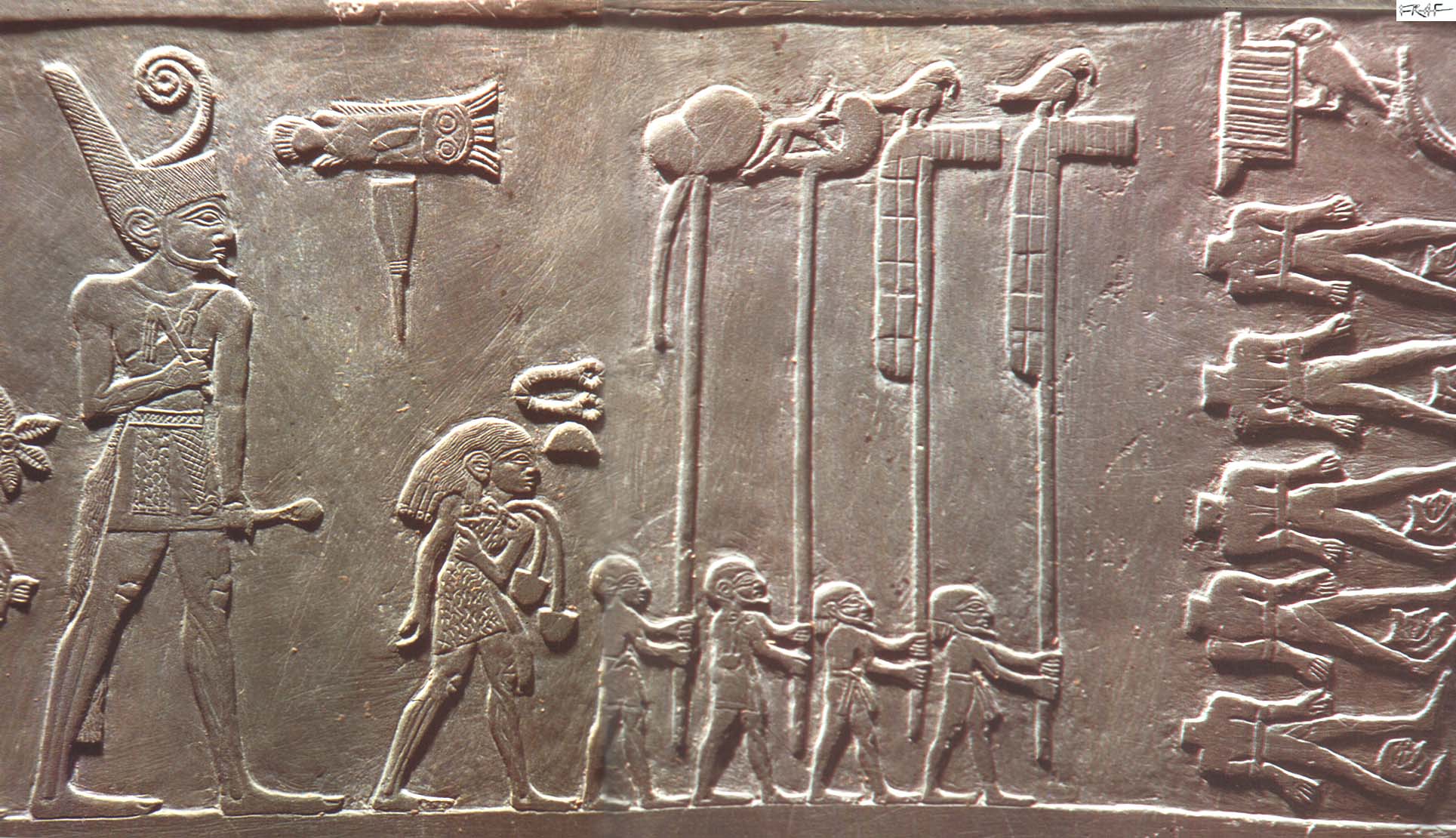
Detail from the Palette of Narmer. Because of the highly religious nature of Ancient Egyptian civilization many of the great works of Ancient Egypt depict gods goddesses and Pharaohs who were also considered divine. Https Escholarship Org Content material Qt1t5224vj Qt1t5224vj Pdf T Qtcc4y. It is also very conservative. The Narmer Palette c.
 Source: pinterest.com
Detail from the Palette of Narmer. The smallest figures were servants entertainers animals trees and architectural details. Keep in touch and experience our cultural programs and educational offerings many of which are community inspired and led. Ancient Egyptian art refers to art produced in ancient Egypt between the 6th millennium BC and the 4th century AD spanning from Prehistoric Egypt until the Christianization of Roman Egypt. The hieratic scale is a system used to visually communicate power in Egyptian as well as the art of other cultures including the ancient Near East and in medieval European art for example.
 Source: nl.pinterest.com
Https Escholarship Org Content material Qt1t5224vj Qt1t5224vj Pdf T Qtcc4y. This means that the pharaoh often appeared noticeably larger than court. The smallest figures were servants entertainers animals trees and architectural details. Basically in any scene where more than one. Ancient Egyptian architecture the architectural monuments produced mainly during the dynastic periods of the first three millennia bce in the Nile valley regions of Egypt and NubiaThe architecture similar to representational art aimed to preserve forms and conventions that were held to reflect the perfection of the world at the primordial moment of creation and to embody.
 Source: pinterest.com
Clear and simple lines combined with simple shapes and flat areas of colour helped to create a sense of order and balance in the art of. Detail from the Palette of Narmer. Because of the highly religious nature of Ancient Egyptian civilization many of the great works of Ancient Egypt depict gods goddesses and Pharaohs who were also considered divine. This meant gods or the pharaoh were usually bigger than other figures followed by figures of high officials or the tomb owner. In Egypt there were definite social classes which were dictated by an Egyptians profession.
 Source: br.pinterest.com
In Egypt there were definite social classes which were dictated by an Egyptians profession. Two kinds are to be distinguished. A timeline showing the dates periods dynasties and significant events in the history and art of ancient Egypt from the Predynastic Period before 3100 BCE to the end of the Roman Period 395 CE. The political and social hierarchies Narmer is huge hieratic scale leadership and status. In Egyptian art the size of a figure indicates its relative importance.
 Source: pinterest.com
In Egyptian art the size of a figure indicates its relative importance. Ancient Egyptian architecture the architectural monuments produced mainly during the dynastic periods of the first three millennia bce in the Nile valley regions of Egypt and NubiaThe architecture similar to representational art aimed to preserve forms and conventions that were held to reflect the perfection of the world at the primordial moment of creation and to embody. Slaves In Egypt Historical Egyptian Work Egypt Historical Israelites. Https Escholarship Org Content material Qt1t5224vj Qt1t5224vj Pdf T Qtcc4y. Because of the highly religious nature of Ancient Egyptian civilization many of the great works of Ancient Egypt depict gods goddesses and Pharaohs who were also considered divine.
 Source: essay.100due.com
Through this use of difference one could assume that the larger the scale of the figure the more important that specific individual was. Clear and simple lines combined with simple shapes and flat areas of colour helped to create a sense of order and balance in the art of. The hieratic scale is a system used to visually communicate power in Egyptian as well as the art of other cultures including the ancient Near East and in medieval European art for example. This meant gods or the pharaoh were usually bigger than other figures followed by figures of high officials or the tomb owner. Previous Post register Next Post black-figure technique.
 Source: pinterest.com
Through this use of difference one could assume that the larger the scale of the figure the more important that specific individual was. Whether the ancient Egyptians even had a word for it is not of importance because it was simply part of their artistic traditions and practices from the very dawn of their kingdom at the end of the fourth millennium BCE. Because of the highly religious nature of Ancient Egyptian civilization many of the great works of Ancient Egypt depict gods goddesses and Pharaohs who were also considered divine. In Ancient Egyptian private tombs are much more informative than has been hastily claimed in the past. Detail from the Palette of Narmer.
 Source: pinterest.com
This meant gods or the pharaoh were usually bigger than other figures followed by figures of high officials or the tomb owner. This means that the pharaoh often appeared noticeably larger than court. The smallest figures were servants entertainers animals trees and architectural details. As a result of this kings were most commonly shown to be the same. All the things You Want To Know To Perceive Historical Egyptian Artwork Artwork Artwork.
 Source: in.pinterest.com
Through this use of difference one could assume that the larger the scale of the figure the more important that specific individual was. Social classes at the top of the pyramid subordinated classes with less power at the bottom. In Ancient Egyptian private tombs are much more informative than has been hastily claimed in the past. Ancient Egyptian architecture the architectural monuments produced mainly during the dynastic periods of the first three millennia bce in the Nile valley regions of Egypt and NubiaThe architecture similar to representational art aimed to preserve forms and conventions that were held to reflect the perfection of the world at the primordial moment of creation and to embody. All the things You Want To Know To Perceive Historical Egyptian Artwork Artwork Artwork.
 Source: de.pinterest.com
A hierarchy is a social system in ancient Egypt. Whether the ancient Egyptians even had a word for it is not of importance because it was simply part of their artistic traditions and practices from the very dawn of their kingdom at the end of the fourth millennium BCE. Because of the highly religious nature of Ancient Egyptian civilization many of the great works of Ancient Egypt depict gods goddesses and Pharaohs who were also considered divine. 29502775 BCE is a great place to start discussion in a class on Ancient Egypt as it highlights some key ideas. The smallest figures were servants entertainers animals trees and architectural details.
Source: cambridge.org
29502775 BCE is a great place to start discussion in a class on Ancient Egypt as it highlights some key ideas. The smallest figures were servants entertainers animals trees and architectural details. These social classes were represented by a pyramid organized hierarchically. In Egyptian art the size of a figure indicates its relative importance. The Narmer Palette c.
 Source: pinterest.com
This meant gods or the pharaoh were usually bigger than other figures followed by figures of high officials or the tomb owner. The smallest figures were servants entertainers animals trees and architectural details. Ancient Egyptian art is characterized by the idea of order. The hieratic scale is a system used to visually communicate power in Egyptian as well as the art of other cultures including the ancient Near East and in medieval European art for example. Through this use of difference one could assume that the larger the scale of the figure the more important that specific individual was.
 Source: cz.pinterest.com
Because of the highly religious nature of Ancient Egyptian civilization many of the great works of Ancient Egypt depict gods goddesses and Pharaohs who were also considered divine. In Egyptian art the size of a figure indicates its relative importance. Because of the highly religious nature of Ancient Egyptian civilization many of the great works of Ancient Egypt depict gods goddesses and Pharaohs who were also considered divine. 29502775 BCE is a great place to start discussion in a class on Ancient Egypt as it highlights some key ideas. The political and social hierarchies Narmer is huge hieratic scale leadership and status.
 Source: blog.stephens.edu
This means that the pharaoh often appeared noticeably larger than court. Karnak Egypt Hierarchical scale is a technique used in art mostly in sculpture and painting in which the artist uses unnatural proportion or scale to depict the relative importance of. It is also very conservative. Keep in touch and experience our cultural programs and educational offerings many of which are community inspired and led. On the one hand those.
 Source: pinterest.com
In Egyptian art the size of a figure indicates its relative importance. For those who would like to know the explanation its due to a principle modern art historians call hierarchical scaling. A hierarchy is a social system in ancient Egypt. Ancient Egyptian art is characterized by the idea of order. 29502775 BCE is a great place to start discussion in a class on Ancient Egypt as it highlights some key ideas.
 Source: pinterest.com
Hierarchic scale Art History Glossary hierarchic scale The use of differences in size to show relative importance. For those who would like to know the explanation its due to a principle modern art historians call hierarchical scaling. Significant or important individuals such as pharaohs were depicted as being much larger than any figures in a scene. Ancient Egyptian art is characterized by the idea of order. Whether the ancient Egyptians even had a word for it is not of importance because it was simply part of their artistic traditions and practices from the very dawn of their kingdom at the end of the fourth millennium BCE.
This site is an open community for users to do sharing their favorite wallpapers on the internet, all images or pictures in this website are for personal wallpaper use only, it is stricly prohibited to use this wallpaper for commercial purposes, if you are the author and find this image is shared without your permission, please kindly raise a DMCA report to Us.
If you find this site value, please support us by sharing this posts to your favorite social media accounts like Facebook, Instagram and so on or you can also bookmark this blog page with the title hierarchal scale in ancient egypt art history by using Ctrl + D for devices a laptop with a Windows operating system or Command + D for laptops with an Apple operating system. If you use a smartphone, you can also use the drawer menu of the browser you are using. Whether it’s a Windows, Mac, iOS or Android operating system, you will still be able to bookmark this website.